
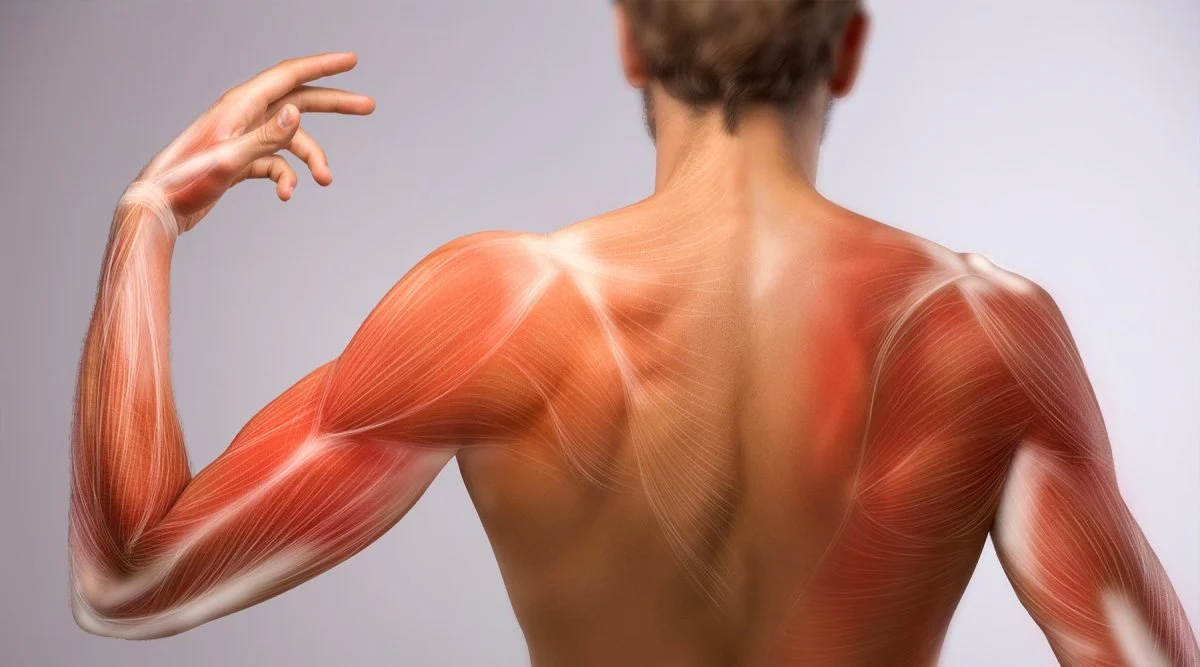

That specific soreness that hits 24–48 hours after an intense workout—not during the exercise, but the day after, or the day after that—is one of the most universally experienced aspects of physical training. This phenomenon, known as delayed onset muscle soreness (DOMS), is also one of the most misunderstood; it isn’t caused by lactic acid buildup, but rather by microscopic tears in the muscle fibers that trigger a necessary inflammatory repair process.
Delayed onset muscle soreness (DOMS) is a normal physiological response to exercise that causes muscle damage at the microscopic level, peaking 24-72 hours after the activity and typically resolving within 3-5 days. It is not an injury, but it does signal that muscles have been stressed beyond their current capacity.
Why DOMS Happens
DOMS occurs primarily from eccentric muscle contractions – when the muscle lengthens under load. Examples:
- The downward phase of a squat
- The lowering phase of a bicep curl
- Running downhill
- Landing from a jump
This type of contraction creates small tears in the muscle fibre structure (specifically the sarcomeres and connective tissue). The resulting inflammatory repair process is what causes the soreness – not lactic acid, as was historically believed. Lactic acid clears from the muscle within hours of exercise.
What DOMS Feels Like
| Symptom | What’s Normal |
|---|---|
| Muscle tenderness to touch | Yes |
| Stiffness and reduced range of motion | Yes |
| Swelling (mild) | Yes |
| Weakness in the affected muscles | Yes – temporary |
| Pain worsening with movement, then easing | Yes |
| Peak soreness 24-72 hours after exercise | Yes |
DOMS is usually manageable and doesn’t prevent normal daily activity. If pain is severe enough to stop normal movement, or if a specific joint is involved, an injury (strain, sprain) should be considered.
How to Reduce DOMS
What Has Solid Evidence
| Strategy | How It Helps |
|---|---|
| Active recovery (light movement) | Increases blood flow; clears inflammatory metabolites; reduces perceived soreness |
| Massage | Shown in multiple studies to reduce DOMS intensity and duration |
| Cold water immersion (cold bath) | Reduces inflammation and perceived soreness; evidence strongest for immediate post-exercise use |
| Compression garments | Modest evidence for reduced swelling and soreness |
| Adequate protein intake | Supports muscle repair; 1.6-2.2g/kg body weight per day |
What Has Some Evidence
| Strategy | Notes |
|---|---|
| NSAIDs (ibuprofen) | Reduces soreness but may blunt the adaptive stimulus – questionable for regular use by athletes |
| Foam rolling | Reduces perceived tightness; evidence for actual DOMS reduction is weaker |
| Tart cherry juice | Multiple studies show modest reduction in DOMS; antioxidant mechanism |
| Omega-3 supplementation | May reduce inflammatory response; evidence growing |
What Doesn’t Work as Well as People Think

- Stretching (before or after) – does not prevent or reduce DOMS consistently in research
- Hot baths – may feel good but don’t significantly reduce DOMS
- Complete rest – doing nothing slows recovery compared to light active movement
DOMS and Muscle Growth
DOMS is often used as a proxy for workout quality – “I’m sore, so it must have worked.” The relationship is more nuanced:
- DOMS does indicate muscle damage occurred, which is one component of the muscle growth stimulus
- But the absence of DOMS does not mean the workout was ineffective – the body adapts and produces less damage from familiar stimuli
- Very severe DOMS may actually impair recovery and subsequent training more than moderate DOMS
- Progressive overload (gradually increasing training demands) is the actual driver of muscle growth, not soreness
DOMS vs Acute Injury – Key Differences
| Feature | DOMS | Muscle/Joint Injury |
|---|---|---|
| Onset | 24-72 hours after exercise | During or immediately after exercise |
| Location | Diffuse, in the muscle belly | Localised, often at a joint |
| Type of pain | Dull ache, stiffness | Sharp, stabbing |
| Movement | Painful but possible | Often unable to use the area |
| Improves with gentle movement | Yes | Usually not |
| Resolves in 3-5 days | Yes | May persist weeks |
If in doubt about whether soreness is DOMS or an injury, see a physiotherapist.
How to Prevent Severe DOMS
- Gradual progression – don’t increase training intensity or volume by more than 10% per week
- Warm up properly – prepares connective tissue and increases blood flow
- Eccentric control – lower weights slowly; this is where DOMS originates
- Adequate nutrition and sleep – the two most important recovery factors
Bottom Line
DOMS is a normal, expected part of training – particularly when trying new exercises or increasing intensity. It peaks at 24-72 hours and resolves in 3-5 days. Active recovery, massage, and adequate protein are the most useful interventions. Soreness severity doesn’t reliably indicate workout quality or muscle growth effectiveness. Train consistently, progress gradually, and your body will adapt – producing less DOMS from the same stimuli over time.




Leave a Comment